In today’s rapidly evolving industrial landscape, manufacturing facilities are under increasing pressure to improve energy efficiency, reduce operational costs, and transition toward low-carbon operations. Heating, Ventilation, and Air Conditioning (HVAC) systems—often among the largest energy consumers in industrial environments—represent a significant opportunity for optimization and decarbonization.
Rather than focusing on isolated equipment upgrades, modern engineering practice is shifting toward system-level HVAC strategies, where performance is enhanced through integrated design, intelligent controls, and electrified technologies. This holistic approach ensures that all components of the HVAC ecosystem work cohesively to deliver maximum efficiency, reliability, and sustainability.
To explore these emerging strategies in depth, a free expert-led webinar has been organized for professionals involved in industrial energy systems, facility engineering, and sustainability planning. This session will provide valuable insights into how manufacturing facilities can modernize HVAC systems while improving performance and reducing environmental impact.
Webinar Overview: A System-Level Perspective on HVAC Optimization
The upcoming webinar will focus on advanced HVAC strategies specifically designed for manufacturing environments. It will emphasize how system-wide thinking—rather than component-level improvements alone—can unlock significant gains in efficiency and operational performance.
Participants will gain exposure to key concepts such as equipment integration, electrification pathways, and advanced control methodologies. The session will also highlight how modern diagnostic tools and performance monitoring techniques can enhance system reliability and reduce downtime.
A central theme of the discussion will be how manufacturing facilities can transition from traditional HVAC configurations to intelligent, low-carbon, and highly optimized systems that align with long-term sustainability objectives.
Key Areas of Focus
The webinar will provide a structured exploration of several critical HVAC topics that are shaping the future of industrial facility design and operation.
1. System-Level HVAC Integration in Manufacturing Facilities
One of the primary focus areas is the integration of HVAC systems at a holistic level. Instead of treating components such as chillers, air handlers, and ventilation systems as independent units, system-level integration ensures that all elements operate in coordination.
This approach allows engineers and facility managers to:
- Improve thermal efficiency across the entire facility
- Reduce energy wastage caused by system mismatches
- Enhance airflow management and temperature control consistency
- Optimize load distribution across HVAC equipment
By adopting a unified systems approach, manufacturing plants can significantly enhance both performance and reliability while reducing overall energy consumption.
2. Optimization of Existing HVAC Systems for Energy Efficiency
Many manufacturing facilities operate with legacy HVAC infrastructure that, while functional, may not be optimized for modern efficiency standards. Rather than requiring complete system replacement, the webinar will explore practical strategies for optimizing existing installations.
Key optimization methods include:
- Fine-tuning system setpoints and operational schedules
- Improving airflow balancing and distribution efficiency
- Upgrading key components for higher performance
- Reducing unnecessary energy consumption during partial load conditions
These improvements can lead to substantial reductions in operational costs while extending the life of existing assets. In many cases, optimization offers one of the most cost-effective pathways toward energy efficiency improvements.
3. Electrification and Heat Pump Technologies in HVAC Design
A major transformation in HVAC engineering is the shift toward electrification, particularly through the adoption of heat pump technologies. As industries move away from fossil-fuel-based heating systems, electrified HVAC solutions are becoming increasingly important in achieving decarbonization goals.
The webinar will examine how heat pumps can be effectively integrated into manufacturing HVAC systems to provide:
- Highly efficient heating and cooling capabilities
- Reduced greenhouse gas emissions
- Improved energy utilization compared to conventional systems
- Compatibility with renewable energy sources
Electrification also supports long-term regulatory compliance and helps organizations align with global sustainability commitments. However, successful implementation requires careful system design to ensure operational reliability and economic viability.
4. Advanced Controls, Fault Detection, and Diagnostics (FDD)
Modern HVAC systems are increasingly dependent on intelligent control systems that continuously monitor performance and adjust operations in real time. The webinar will highlight how advanced controls and Fault Detection and Diagnostics (FDD) technologies can significantly improve system performance.
These technologies enable:
- Early identification of system inefficiencies or malfunctions
- Real-time performance optimization based on demand conditions
- Reduced maintenance costs through predictive insights
- Improved system reliability and reduced downtime
By leveraging data-driven control strategies, facility operators can transition from reactive maintenance practices to proactive system management. This not only enhances efficiency but also improves operational resilience.
5. ASHRAE Guideline 36 and High-Performance Control Sequences
The session will also explore the application of ASHRAE Guideline 36, which provides standardized sequences for high-performance HVAC control systems.
This guideline is widely recognized for enabling:
- Faster system response times
- Improved coordination between HVAC components
- Reduced energy consumption through optimized control logic
- Enhanced consistency in system operation across facilities
By implementing structured control frameworks such as ASHRAE Guideline 36, organizations can ensure that HVAC systems operate at peak efficiency while maintaining occupant comfort and process requirements.
6. Energy Recovery and Humidification Strategies
Another important aspect of modern HVAC system design is the use of energy recovery technologies. These systems capture waste energy from exhaust air streams and reuse it to precondition incoming air, significantly improving overall efficiency.
In addition, humidification strategies play a crucial role in manufacturing environments where precise humidity control is required for product quality and process stability.
The webinar will discuss:
- Heat and energy recovery ventilation systems
- Integration of humidification and dehumidification processes
- Optimization of indoor environmental conditions for manufacturing precision
- Reduction of energy losses through thermal reuse systems
What Participants Will Learn
In just one hour, attendees will gain a comprehensive understanding of how modern HVAC systems can be transformed through integrated engineering approaches. The session is designed to provide both conceptual insights and practical takeaways applicable to real-world industrial environments.
Key Learning Outcomes:
- A clear understanding of how system-level HVAC strategies can be integrated to enhance performance in manufacturing facilities
- Insight into optimizing existing HVAC infrastructure to achieve improved energy efficiency and reduced operational expenditure
- Knowledge of how electrification and heat pump technologies contribute to decarbonizing industrial HVAC systems
- Practical understanding of advanced control systems, fault detection, and diagnostics for improving reliability and operational performance
These learnings are intended to help engineers, facility managers, and sustainability professionals make informed decisions regarding HVAC modernization and energy transition strategies.
Why This Webinar Matters
As industries face increasing pressure to decarbonize and improve energy performance, HVAC systems represent one of the most impactful areas for improvement. However, achieving meaningful results requires more than incremental upgrades—it demands a shift toward system-level thinking and intelligent integration.
This webinar provides a unique opportunity to explore how modern HVAC strategies can:
- Support sustainability and carbon reduction goals
- Improve operational efficiency and reduce lifecycle costs
- Enhance system reliability and resilience
- Enable long-term energy transition planning
By bringing together expertise across engineering, controls, and electrification, the session offers a comprehensive perspective on the future of industrial HVAC systems.
Webinar Schedule and Registration Details
Please note that this session will be conducted at a special global-friendly time to accommodate participants across different time zones.
Webinar Title:
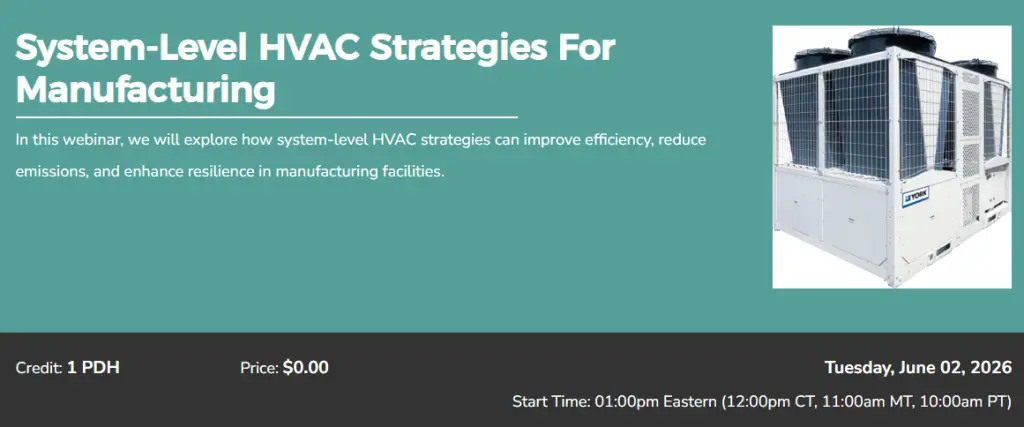
System-Level HVAC Strategies for Manufacturing: Optimization, Electrification, and Advanced Controls
Date:
June 02, 2026
Time:
1:00 PM Eastern Time (ET)
12:00 Noon Central Time (CT)
11:00 AM Mountain Time (MT)
10:00 AM Pacific Time (PT)
This carefully scheduled session ensures accessibility for professionals across North America and other regions.
Register for the Webinar
Professionals interested in advancing their understanding of industrial HVAC optimization and electrification strategies are encouraged to attend this free session.
To secure your participation, please register using the link below:
👉 https://noonpi.com/register-free-webinar/?webinar=NP-F-1060W&additional_fields=1
Final Thoughts
The future of HVAC in manufacturing lies in integration, intelligence, and electrification. As systems become more complex and performance expectations continue to rise, the importance of system-level optimization cannot be overstated.
This webinar offers a valuable opportunity to gain practical insights into the technologies and strategies shaping next-generation HVAC systems. Whether your focus is energy efficiency, decarbonization, or operational reliability, the knowledge shared in this session will provide meaningful direction for future projects and initiatives.